Psalm 51 Helps Us Sing
In the middle of Scripture is a hymnal. This hymnal is full of psalms meant to be sung. The psalms proclaim glorious truths about God. They help us understand what it means to be truly human. They sing of the coming Christ and our need for his salvation. And they lead us to respond to these truths through every season of the soul. From the mountaintop of joy through the valley of sorrow, the book of Psalms teaches us how to sing through it all.
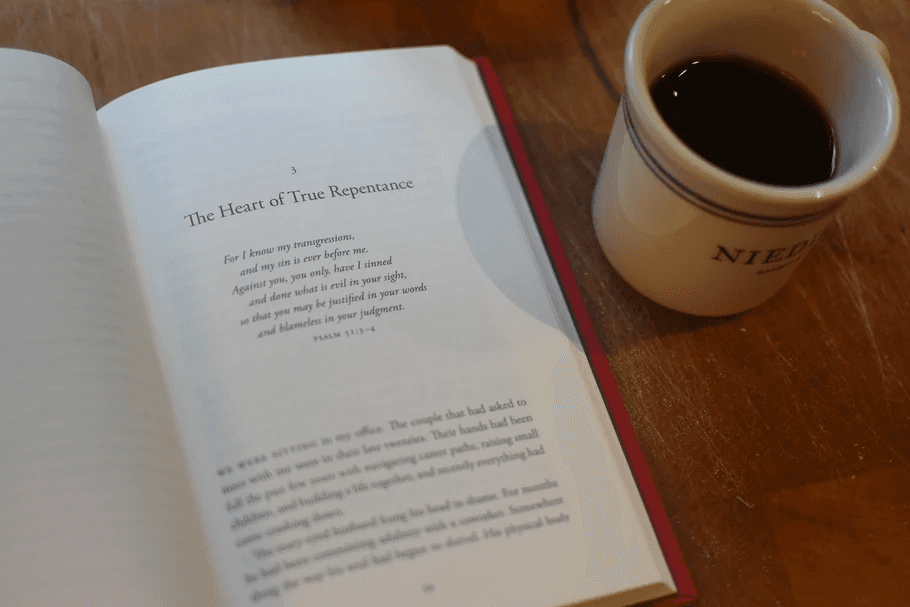
But how can we sing when sin seems to silence our song? Psalm 51 helps us sing even then.
David wrote this psalm at the lowest point of his life. He had sinned against everyone he knew, and above all, his God. His transgressions struck a deadly match, setting ablaze the life God had given him, leaving it in ruins at his feet. In this moment of utter despair, he began to sing. And the lyrics of his song show us how we too might sing through the brokenness of our sin and experience forgiveness in the Savior.
I have turned to Psalm 51 many times over the years. This weathered page of my Bible has often provided language to lead my heart to and through repentance. When I have sinned again. When I have completely blown it. When temptation claims the battle and it seems the night has won. The longer I have prayed Psalm 51, the greater my desire has grown to sing it. There are wonderful versions of this psalm that have been sung through church history, and yet most churches today have never sung these words together in a worship service.
One challenge with singing the psalms is that Hebrew poetry and the English metrical system do not easily shake hands. Hebrew poetry is about rhythm, sound, and the practice of parallelism stacking ideas together. English hymnody is about meter, rhyme, poetry, sing-ability, and developing thought with more fluidity. So, fitting any psalm into meter and rhyme requires a measure of adaptation and interpretation. It seeks to keep one eye on the original text while keeping the other on the way we understand singing today, all the while considering how each word fits on the lips and sounds in the ear.
The Need to Sing Psalm 51
After writing a devotional and doxological exposition of Psalm 51 in my book Create in Me a Clean Heart,1 I was asked to conclude it with a new composition that would return the reader’s thoughts to its original medium: the lyrics to a song. I was happy to do so. As I sat down at our piano to write, I kept repeating the first two lines to Stuart Townend’s melody for his hymn “How Deep the Father’s Love.”
O God, be merciful to me,
Found on your great compassion
The more lines I wrote, I found the text comfortably settling into that melody. Stuart was kind to grant permission to publish this new text with his original tune, and for that I am grateful. This version doesn’t say everything, but it says what it is able.
The prayer for this new setting of Psalm 51 is that it helps Christians sing when sin seems to have silenced their song. That these words from one sinner long ago would help sinners today walk in repentance and faith and experience the mercy of God given to us in Christ.
“O God, Be Merciful to Me” (Psalm 51)
O God, be merciful to me,
Found on your great compassion.
Your steadfast love my only plea,
Blot out all my transgressions.
No tears could wash me from within,
No works could make me righteous.
But oh, the blood of Jesus Christ
Can make this sinner spotless.
Against you only have I sinned
And scorned the King of heaven.
From youth my pride and lust have been
Too oft my heart's affection.
Create in me a heart so clean,
Renew a steadfast spirit.
Restore the joy that once had been
Found only in your presence.
A broken heart you have required,
And this all I can offer.
O cleanse my heart with holy fire,
And form it as an altar.
Then I will tell of boundless love,
Of mercy beyond measure.
For these I've found in you, my God,
All praise to you forever.
Free lyric sheets are available here in English, Spanish, Indonesian, Italian, French, and Malagasy. Thank you to our friends at the Getty Music Foundation for their work on these translations.

Notes
- Amazon affiliate links are used where appropriate. As an Amazon Associate we earn from qualifying purchases. Thank you for supporting Doxology & Theology. ↩